Ôn tập E-LearningTài liệu hỗ trợ ôn tập

Ôn tập Đọc

EHOU · 787 câu hỏi ôn tập · đáp án tham khảo kèm giải thích

Thi thử môn này

Câu 401–450 / 787

401

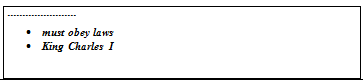
Read the text and choose the best answer to complete the gap.In the 17th century, became a constitutional monarchy. King Charles I signed an agreement. He had to go through the English Parliament to exact new taxes and laws or to start wars. Immediately after signing the agreement, the king ignored it. He tried to rule with absolute power. He was beheaded for treason. The new era of constitutional monarchy had begun. The Russian Empire was an absolute monarchy in . The first ruler was Peter I. He was a member of the Romanov family. He became tsar in 1682. "Tsar" is the Russian word for "emperor." The Romanov family ruled this empire until the February Revolution of 1917. In this year, the Russian people revolted. The reigning tsar, Nicholas II was forced to give up his throne. By 1918, Nicholas II and his family were shot before a firing squad. Types of Monarchy

  • AAbsoluteĐáp án
  • BSymbolic
  • CEmpire
  • DConstitutional Monarchy
Liên kết câu
402

Read the text and choose the best answer to complete the gap.Monarchy in EuropeA monarchy is a form of government where a single ruler is the head of state. It is one of the oldest forms of government in the world. Monarchs are usually kings or queens. But they can also be a chief, an emperor, or called by another name. In some countries, such as Japan, the monarch is merely symbolic. They are figureheads with no real power. In other countries, the monarch wields considerable power. There are currently 29 sovereign monarchies around the world. Hereditary monarchy is the most common style of succession. This form is used by most of the world's monarchies. In this case, all of the kings and queens come from the same family. A family that rules for a span of time is called a dynasty. The crown is passed down from one member to another member of the family. The hereditary system has the advantages of stability, continuity, and predictability. Family affection and loyalty are also stabilizing factors. Types of Monarchy

  • AAbsolute
  • BConstitutional Monarchy
  • CEmpire
  • DSymbolic

Câu này đang được bổ sung đáp án.

Liên kết câu
403

Read the text and choose the best answer to complete the gap.Over the centuries, most European countries were ruled by monarchs. The , , and still have constitutional monarchies. In a constitutional monarchy a king or queen reigns but must obey the constitutional laws of the nation. This form of government severely limits the monarch's power. In the 17th century, became a constitutional monarchy. King Charles I signed an agreement. He had to go through the English Parliament to exact new taxes and laws or to start wars. Immediately after signing the agreement, the king ignored it. He tried to rule with absolute power. He was beheaded for treason. The new era of constitutional monarchy had begun. Types of Monarchy

  • AConstitutional MonarchyĐáp án
  • BSymbolic
  • CAbsolute
  • DEmpire
Liên kết câu
404

Read the text and choose the best answer. Many young people from disadvantaged social classes join gangs. Gangs are groups of individuals who share a common identity. Some anthropologists believe the gang structure is one of the most ancient forms of human organization. Gangs are often associated with criminal activities. Street gangs tend to be populated with young people from low income or impoverished homes. In contrast, organized crime gangs such as the Italian-American Mafia usually occupy the middle or upper class stratum of society. Gangs usually take over a territory in a city or suburb. They call this territory their "turf." One common criminal activity on their turf is "providing protection." This is a common style of extortion in which a gang provides protection from its own members for money. Since the 1970s, many gangs have been associated with selling drugs. The most problematic substance associated with gangs is crack cocaine. They are also known to commit burglaries, car theft, and armed robberies. Individual members of gangs are usually referred to as gangsters. These members frequently join in their teens. This is often the result of early exposure to drugs and violence. Low-income housing projects and poor neighborhoods are ideal locations for gangs to exist and thrive. Sometimes, new recruits for a gang are "jumped in." This is when the other gang members beat up the new recruit to test their dedication and loyalty. Recruits must also sometimes commit a crime such as robbery, rape, or murder to gain entry. Once in a gang, there are only two ways for a member to quit. One way is for the member to die. The other way is for the member to desert the gang. The deserting of a gang usually gains the deserter a death sentence from the other gang members. Members of gangs have a very short life expectancy. Because of this lifestyle, morality is often ignored. Criminal acts of violence are not a taboo. In fact, violence is often seen as a way to gain honor and prestige within the gang. According to the passage, all of the following are mentioned as illegal activities connected with gangs EXCEPT:

  • Alending moneyĐáp án
  • Bselling drugs
  • Ckilling people
  • Dstealing cars
Giải thích:

Bài nhắc bán ma túy, giết người khi gia nhập và trộm xe, nhưng không nhắc cho vay tiền.

Liên kết câu
405

Read the text and choose the best answer. Many young people from disadvantaged social classes join gangs. Gangs are groups of individuals who share a common identity. Some anthropologists believe the gang structure is one of the most ancient forms of human organization. Gangs are often associated with criminal activities. Street gangs tend to be populated with young people from low income or impoverished homes. In contrast, organized crime gangs such as the Italian-American Mafia usually occupy the middle or upper class stratum of society. Gangs usually take over a territory in a city or suburb. They call this territory their "turf." One common criminal activity on their turf is "providing protection." This is a common style of extortion in which a gang provides protection from its own members for money. Since the 1970s, many gangs have been associated with selling drugs. The most problematic substance associated with gangs is crack cocaine. They are also known to commit burglaries, car theft, and armed robberies. Individual members of gangs are usually referred to as gangsters. These members frequently join in their teens. This is often the result of early exposure to drugs and violence. Low-income housing projects and poor neighborhoods are ideal locations for gangs to exist and thrive. Sometimes, new recruits for a gang are "jumped in." This is when the other gang members beat up the new recruit to test their dedication and loyalty. Recruits must also sometimes commit a crime such as robbery, rape, or murder to gain entry. Once in a gang, there are only two ways for a member to quit. One way is for the member to die. The other way is for the member to desert the gang. The deserting of a gang usually gains the deserter a death sentence from the other gang members. Members of gangs have a very short life expectancy. Because of this lifestyle, morality is often ignored. Criminal acts of violence are not a taboo. In fact, violence is often seen as a way to gain honor and prestige within the gang. According to the passage, how can a person stop being a gang member?

  • ALeave the gangĐáp án
  • BFight against other members
  • CRecruit a new members
  • DSteal money
Liên kết câu
406

Read the text and choose the best answer. Many young people from disadvantaged social classes join gangs. Gangs are groups of individuals who share a common identity. Some anthropologists believe the gang structure is one of the most ancient forms of human organization. Gangs are often associated with criminal activities. Street gangs tend to be populated with young people from low income or impoverished homes. In contrast, organized crime gangs such as the Italian-American Mafia usually occupy the middle or upper class stratum of society. Gangs usually take over a territory in a city or suburb. They call this territory their "turf." One common criminal activity on their turf is "providing protection." This is a common style of extortion in which a gang provides protection from its own members for money. The word disadvantaged in the passage is closet in meaning to

  • ApoorĐáp án
  • BDisabled
  • Cweak
  • DUnhappy
Liên kết câu
407

Read the text and choose the best answer. Many young people from disadvantaged social classes join gangs. Gangs are groups of individuals who share a common identity. Some anthropologists believe the gang structure is one of the most ancient forms of human organization. Gangs are often associated with criminal activities. Street gangs tend to be populated with young people from low income or impoverished homes. In contrast, organized crime gangs such as the Italian-American Mafia usually occupy the middle or upper class stratum of society. Gangs usually take over a territory in a city or suburb. They call this territory their "turf." One common criminal activity on their turf is "providing protection." This is a common style of extortion in which a gang provides protection from its own members for money. What do groups of gangs share?

  • Aa common identityĐáp án
  • Bmoney
  • Ca territory
  • Dlow income
Liên kết câu
408

Read the text and choose the best answer. Many young people from disadvantaged social classes join gangs. Gangs are groups of individuals who share a common identity. Some anthropologists believe the gang structure is one of the most ancient forms of human organization. Gangs are often associated with criminal activities. Street gangs tend to be populated with young people from low income or impoverished homes. In contrast, organized crime gangs such as the Italian-American Mafia usually occupy the middle or upper class stratum of society. Gangs usually take over a territory in a city or suburb. They call this territory their "turf." One common criminal activity on their turf is "providing protection." This is a common style of extortion in which a gang provides protection from its own members for money. Who are members of street gangs?

  • Aanthropologists
  • Byoung people
  • Cold people
  • Dyoung people from low income or impoverished homesĐáp án
Giải thích:

Bài viết rõ băng đảng đường phố gồm thanh niên từ gia đình thu nhập thấp hoặc nghèo khó.

Liên kết câu
409

Read the text and choose the best answer. Since the 1970s, many gangs have been associated with selling drugs. The most problematic substance associated with gangs is crack cocaine. They are also known to commit burglaries, car theft, and armed robberies. Individual members of gangs are usually referred to as gangsters. These members frequently join in their teens. This is often the result of early exposure to drugs and violence. Low-income housing projects and poor neighborhoods are ideal locations for gangs to exist and thrive. Sometimes, new recruits for a gang are "jumped in." This is when the other gang members beat up the new recruit to test their dedication and loyalty. Recruits must also sometimes commit a crime such as robbery, rape, or murder to gain entry. Once in a gang, there are only two ways for a member to quit. One way is for the member to die. The other way is for the member to desert the gang. The deserting of a gang usually gains the deserter a death sentence from the other gang members. Members of gangs have a very short life expectancy. Because of this lifestyle, morality is often ignored. Criminal acts of violence are not a taboo. In fact, violence is often seen as a way to gain honor and prestige within the gang. In stating that new recruits for a gang are "jumped in" the author means that they are

  • Ahit by other membersĐáp án
  • Bforced to show their courage
  • Cordered to steal money
  • Dasked to build up their physical strength
Liên kết câu
410

Read the text and choose the best answer.A monarchy is a form of government where a single ruler is the head of state. It is one of the oldest forms of government in the world. Monarchs are usually kings or queens. But they can also be a chief, an emperor, or called by another name. In some countries, such as , the monarch is merely symbolic. They are figureheads with no real power. In other countries, the monarch wields considerable power. There are currently 29 sovereign monarchies around the world. Hereditary monarchy is the most common style of succession. This form is used by most of the world's monarchies. In this case, all of the kings and queens come from the same family. A family that rules for a span of time is called a dynasty. The crown is passed down from one member to another member of the family. The hereditary system has the advantages of stability, continuity, and predictability. Family affection and loyalty are also stabilizing factors. According to the passage, hereditary monarchy is

  • Athe most common style of successionĐáp án
  • Ba figurehead position
  • Ca form of absolute monarchy
  • Dalso called a tsar
Liên kết câu
411

Read the text and choose the best answer.A monarchy is a form of government where a single ruler is the head of state. It is one of the oldest forms of government in the world. Monarchs are usually kings or queens. But they can also be a chief, an emperor, or called by another name. In some countries, such as , the monarch is merely symbolic. They are figureheads with no real power. In other countries, the monarch wields considerable power. There are currently 29 sovereign monarchies around the world. The word considerable is closet in meaning to

  • AextensiveĐáp án
  • Bslight
  • Cthoughtful
  • Dnormal
Liên kết câu
412

Read the text and choose the best answer.Almost everyone with or without a computer is aware of the latest technological revolution destined to change forever the way in which humans communicate, namely, the Information Superhighway, best exemplified by the ubiquitous Internet. Already, millions of people around the world are linked by computer simply by having a modem and an address on the 'Net', in much the same way that owning a telephone links us to almost anyone who pays a phone bill. In fact, since the computer connections are made via the phone line, the Internet can be envisaged as a network of visual telephone links. It remains to be seen in which direction the Information Superhighway is headed, but many believe it is the educational hope of the future. The World Wide Web, an enormous collection of Internet addresses or sites, all of which can be accessed for information, has been mainly responsible for the increase in interest in the Internet in the 1990s. Before the World Wide Web, the 'Net' was comparable to an integrated collection of computerised typewriters, but the introduction of the 'Web' in 1990 allowed not only text links to be made but also graphs, images and even video. A Web site consists of a 'home page', the first screen of a particular site on the computer to which you are connected, from where access can be had to other subject related 'pages' at the site and to thousands of other computers all over the world. This is achieved by a process called 'hypertext'. By clicking with a mouse device on various parts of the screen, a person connected to the 'Net' can go travelling, or 'surfing' through a web of pages to locate whatever information is required.Anyone can set up a site; promoting your club, your institution, your company's products or simply yourself, is what the Web and the Internet is all about. And what is more, information on the Internet is not owned or controlled by anyone organisation. It is, perhaps, true to say that no-one and therefore everyone owns the 'Net'. Because of the relative freedom of access to information, the Internet has often been criticised by the media as a potentially hazardous tool in the hands of young computer users. This perception has proved to be largely false however, and the vast majority of users both young and old get connected with the Internet for the dual purposes for which it was intended – discovery and delight.What would the next paragraph to follow the passage probably be about?

  • AThe cost of using the Internet
  • BAbuse of the Internet by youth
  • CAdvertising on the World Wide Web
  • DThe future of the InternetĐáp án
Giải thích:

Đoạn đầu còn bỏ ngỏ hướng đi của Information Superhighway, nên đoạn tiếp theo có thể bàn về tương lai của Internet.

Liên kết câu
413

Read the text and choose the best answer.Almost everyone with or without a computer is aware of the latest technological revolution destined to change forever the way in which humans communicate, namely, the Information Superhighway, best exemplified by the ubiquitous Internet. Already, millions of people around the world are linked by computer simply by having a modem and an address on the 'Net', in much the same way that owning a telephone links us to almost anyone who pays a phone bill. In fact, since the computer connections are made via the phone line, the Internet can be envisaged as a network of visual telephone links. It remains to be seen in which direction the Information Superhighway is headed, but many believe it is the educational hope of the future. The World Wide Web, an enormous collection of Internet addresses or sites, all of which can be accessed for information, has been mainly responsible for the increase in interest in the Internet in the 1990s. Before the World Wide Web, the 'Net' was comparable to an integrated collection of computerised typewriters, but the introduction of the 'Web' in 1990 allowed not only text links to be made but also graphs, images and even video. A Web site consists of a 'home page', the first screen of a particular site on the computer to which you are connected, from where access can be had to other subject related 'pages' at the site and to thousands of other computers all over the world. This is achieved by a process called 'hypertext'. By clicking with a mouse device on various parts of the screen, a person connected to the 'Net' can go travelling, or 'surfing' through a web of pages to locate whatever information is required.Anyone can set up a site; promoting your club, your institution, your company's products or simply yourself, is what the Web and the Internet is all about. And what is more, information on the Internet is not owned or controlled by anyone organisation. It is, perhaps, true to say that no-one and therefore everyone owns the 'Net'. Because of the relative freedom of access to information, the Internet has often been criticised by the media as a potentially hazardous tool in the hands of young computer users. This perception has proved to be largely false however, and the vast majority of users both young and old get connected with the Internet for the dual purposes for which it was intended – discovery and delight.Which is the best title for the passage ?

  • AHow to Use the Internet
  • BThe World Wide Web
  • CThe Internet RevolutionĐáp án
  • DThe Educational Hope of the Future
Giải thích:

Bài viết bao quát cuộc cách mạng Internet và World Wide Web, nên tiêu đề chung nhất là The Internet Revolution.

Liên kết câu
414

Read the text and choose the best answer.Almost everyone with or without a computer is aware of the latest technological revolution destined to change forever the way in which humans communicate, namely, the Information Superhighway, best exemplified by the ubiquitous Internet. Already, millions of people around the world are linked by computer simply by having a modem and an address on the 'Net', in much the same way that owning a telephone links us to almost anyone who pays a phone bill. In fact, since the computer connections are made via the phone line, the Internet can be envisaged as a network of visual telephone links. It remains to be seen in which direction the Information Superhighway is headed, but many believe it is the educational hope of the future.To what do the following pronoun "it" in the passage refer?

  • AThe Information SuperhighwayĐáp án
  • Bcomputer
  • CInternet address or site
  • Dvisual telephone link
Liên kết câu
415

Read the text and choose the best answer.Almost everyone with or without a computer is aware of the latest technological revolution destined to change forever the way in which humans communicate, namely, the Information Superhighway, best exemplified by the ubiquitous Internet. Already, millions of people around the world are linked by computer simply by having a modem and an address on the 'Net', in much the same way that owning a telephone links us to almost anyone who pays a phone bill. In fact, since the computer connections are made via the phone line, the Internet can be envisaged as a network of visual telephone links. It remains to be seen in which direction the Information Superhighway is headed, but many believe it is the educational hope of the future.What is the main point of the paragraph?

  • AAlmost everyone has heard of the Information Superhighway.
  • BThe Internet will revolutionise the way people communicate.Đáp án
  • CYou need a modem and an address to use the Internet.
  • DNo-one knows where the Information Superhighway is headed.
Giải thích:

Ý chính của đoạn là Internet sẽ cách mạng hóa cách con người giao tiếp.

Liên kết câu
416

Read the text and choose the best answer.As many as one thousand years ago in the Southwest, the Hopi and Zuni Indians of North America were building with adobe — sun-baked brick plastered with mud. Their homes looked remarkably like modem apartment houses. Some were four stories high and contained quarters for perhaps a thousand people, along with storerooms for grain and other goods. These buildings were usually put up against cliffs, both to make construction easier and for defense against enemies. They were really villages in themselves, as later Spanish explorers must have realized since they called them “pueblos,” which is Spanish for towns.The people of the pueblos raised what are called “the three sisters” — corns, beans, and squash. They made excellent pottery and wove marvelous baskets, some so fine that they could hold water. The Southwest has always been a dry country, where water is scarce. The Hopi and Zuni brought water from streams to their fields and gardens through irrigation ditches. Water was so important that it played a major role in their religion. They developed elaborate ceremonies and religious rituals to bring rain....The word “scarce” is closest in meaning to

  • AlimitedĐáp án
  • Bpure
  • Chidden
  • Dnecessary
Liên kết câu
417

Read the text and choose the best answer.As many as one thousand years ago in the Southwest, the Hopi and Zuni Indians of North America were building with adobe — sun-baked brick plastered with mud. Their homes looked remarkably like modem apartment houses. Some were four stories high and contained quarters for perhaps a thousand people, along with storerooms for grain and other goods. These buildings were usually put up against cliffs, both to make construction easier and for defense against enemies. They were really villages in themselves, as later Spanish explorers must have realized since they called them “pueblos,” which is Spanish for towns.The people of the pueblos raised what are called “the three sisters” — corns, beans, and squash. They made excellent pottery and wove marvelous baskets, some so fine that they could hold water. The Southwest has always been a dry country, where water is scarce. The Hopi and Zuni brought water from streams to their fields and gardens through irrigation ditches. Water was so important that it played a major role in their religion. They developed elaborate ceremonies and religious rituals to bring rain.According to the passage, the Hopi and Zuni typically built their homes

  • Ain valleys
  • Bon open plains
  • Cagainst cliffsĐáp án
  • Dnext to streams
Giải thích:

Bài viết nói nhà của người Hopi và Zuni thường được xây dựa vào vách đá.

Liên kết câu
418

Read the text and choose the best answer.As many as one thousand years ago in the Southwest, the Hopi and Zuni Indians of North America were building with adobe — sun-baked brick plastered with mud. Their homes looked remarkably like modem apartment houses. Some were four stories high and contained quarters for perhaps a thousand people, along with storerooms for grain and other goods. These buildings were usually put up against cliffs, both to make construction easier and for defense against enemies. They were really villages in themselves, as later Spanish explorers must have realized since they called them “pueblos,” which is Spanish for towns.The people of the pueblos raised what are called “the three sisters” — corns, beans, and squash. They made excellent pottery and wove marvelous baskets, some so fine that they could hold water. The Southwest has always been a dry country, where water is scarce. The Hopi and Zuni brought water from streams to their fields and gardens through irrigation ditches. Water was so important that it played a major role in their religion. They developed elaborate ceremonies and religious rituals to bring rain.It can be inferred from the passage that the dwellings of the Hopi and Zuni were....

  • Aquickly constructed
  • Bdifficult to defend
  • Chighly advancedĐáp án
  • Dvery small
Giải thích:

Nhà cao bốn tầng, chứa khoảng nghìn người như chung cư hiện đại, cho thấy trình độ xây dựng rất tiên tiến.

Liên kết câu
419

Read the text and choose the best answer.As many as one thousand years ago in the Southwest, the Hopi and Zuni Indians of North America were building with adobe — sun-baked brick plastered with mud. Their homes looked remarkably like modem apartment houses. Some were four stories high and contained quarters for perhaps a thousand people, along with storerooms for grain and other goods. These buildings were usually put up against cliffs, both to make construction easier and for defense against enemies. They were really villages in themselves, as later Spanish explorers must have realized since they called them “pueblos,” which is Spanish for towns.The people of the pueblos raised what are called “the three sisters” — corns, beans, and squash. They made excellent pottery and wove marvelous baskets, some so fine that they could hold water. The Southwest has always been a dry country, where water is scarce. The Hopi and Zuni brought water from streams to their fields and gardens through irrigation ditches. Water was so important that it played a major role in their religion. They developed elaborate ceremonies and religious rituals to bring rain.The author uses the phrase “the three sisters” to refer to

  • Aimportant cropsĐáp án
  • Bfamily members
  • CHopi women
  • Drain ceremonies
Liên kết câu
420

Read the text and choose the best answer.As many as one thousand years ago in the Southwest, the Hopi and Zuni Indians of North America were building with adobe — sun-baked brick plastered with mud. Their homes looked remarkably like modem apartment houses. Some were four stories high and contained quarters for perhaps a thousand people, along with storerooms for grain and other goods. These buildings were usually put up against cliffs, both to make construction easier and for defense against enemies. They were really villages in themselves, as later Spanish explorers must have realized since they called them “pueblos,” which is Spanish for towns.The people of the pueblos raised what are called “the three sisters” — corns, beans, and squash. They made excellent pottery and wove marvelous baskets, some so fine that they could hold water. The Southwest has always been a dry country, where water is scarce. The Hopi and Zuni brought water from streams to their fields and gardens through irrigation ditches. Water was so important that it played a major role in their religion. They developed elaborate ceremonies and religious rituals to bring rain.The way of life of less-settled groups was simpler and more strongly influenced by nature. Small tribes such as the Shoshone and Ute wandered the dry and mountainous lands between the Rocky Mountains and the Pacific Ocean. They gathered seeds and hunted small animals such as rabbits and snakes. In the Far North the ancestors of today’s Inuit hunted seals, walnises, and the great whales. They lived right on the frozen seas in shelters called igloos built of blocks of packed snow. When summer came, they fished for salmon and hunted the lordly caribou.The Cheyenne, Pawnee, and Sioux tribes, known as the Plains Indians, lived on the grasslands between the Rocky Mountains and the Mississippi River. They hunted bison, commonly called the buffalo. Its meat was the chief food of these tribes, and its hide was used to make their clothing and the covering of their tents and tipis.According to the passage, which of the following tribes lived in the grasslands?

  • AThe Cheyenne and SiouxĐáp án
  • BThe Shoshone and Ute
  • CThe Pawnee and Inuit
  • DThe Hopi and Zuni
Liên kết câu
421

Read the text and choose the best answer.As many as one thousand years ago in the Southwest, the Hopi and Zuni Indians of North America were building with adobe — sun-baked brick plastered with mud. Their homes looked remarkably like modem apartment houses. Some were four stories high and contained quarters for perhaps a thousand people, along with storerooms for grain and other goods. These buildings were usually put up against cliffs, both to make construction easier and for defense against enemies. They were really villages in themselves, as later Spanish explorers must have realized since they called them “pueblos,” which is Spanish for towns.The people of the pueblos raised what are called “the three sisters” — corns, beans, and squash. They made excellent pottery and wove marvelous baskets, some so fine that they could hold water. The Southwest has always been a dry country, where water is scarce. The Hopi and Zuni brought water from streams to their fields and gardens through irrigation ditches. Water was so important that it played a major role in their religion. They developed elaborate ceremonies and religious rituals to bring rain.The way of life of less-settled groups was simpler and more strongly influenced by nature. Small tribes such as the Shoshone and Ute wandered the dry and mountainous lands between the Rocky Mountains and the Pacific Ocean. They gathered seeds and hunted small animals such as rabbits and snakes. In the Far North the ancestors of today’s Inuit hunted seals, walnises, and the great whales. They lived right on the frozen seas in shelters called igloos built of blocks of packed snow. When summer came, they fished for salmon and hunted the lordly caribou.The Cheyenne, Pawnee, and Sioux tribes, known as the Plains Indians, lived on the grasslands between the Rocky Mountains and the Mississippi River. They hunted bison, commonly called the buffalo. Its meat was the chief food of these tribes, and its hide was used to make their clothing and the covering of their tents and tipis.The author gives an explanation for all of the following words EXCEPT

  • AcaribouĐáp án
  • Bpueblos
  • Cadobe
  • Dbison
Giải thích:

Adobe, pueblos và bison đều được giải thích trong bài, còn caribou chỉ được nhắc là 'lordly' mà không giải thích.

Liên kết câu
422

Read the text and choose the best answer.As many as one thousand years ago in the Southwest, the Hopi and Zuni Indians of North America were building with adobe — sun-baked brick plastered with mud. Their homes looked remarkably like modem apartment houses. Some were four stories high and contained quarters for perhaps a thousand people, along with storerooms for grain and other goods. These buildings were usually put up against cliffs, both to make construction easier and for defense against enemies. They were really villages in themselves, as later Spanish explorers must have realized since they called them “pueblos,” which is Spanish for towns.The people of the pueblos raised what are called “the three sisters” — corns, beans, and squash. They made excellent pottery and wove marvelous baskets, some so fine that they could hold water. The Southwest has always been a dry country, where water is scarce. The Hopi and Zuni brought water from streams to their fields and gardens through irrigation ditches. Water was so important that it played a major role in their religion. They developed elaborate ceremonies and religious rituals to bring rain.The way of life of less-settled groups was simpler and more strongly influenced by nature. Small tribes such as the Shoshone and Ute wandered the dry and mountainous lands between the Rocky Mountains and the Pacific Ocean. They gathered seeds and hunted small animals such as rabbits and snakes. In the Far North the ancestors of today’s Inuit hunted seals, walnises, and the great whales. They lived right on the frozen seas in shelters called igloos built of blocks of packed snow. When summer came, they fished for salmon and hunted the lordly caribou.The Cheyenne, Pawnee, and Sioux tribes, known as the Plains Indians, lived on the grasslands between the Rocky Mountains and the Mississippi River. They hunted bison, commonly called the buffalo. Its meat was the chief food of these tribes, and its hide was used to make their clothing and the covering of their tents and tipis.The author groups North American Indians according to their

  • Atribes and geographical regionsĐáp án
  • Barts and crafts
  • Cdate of appearance on the continent
  • Drituals and ceremonies
Liên kết câu
423

Read the text and choose the best answer.As many as one thousand years ago in the Southwest, the Hopi and Zuni Indians of North America were building with adobe — sun-baked brick plastered with mud. Their homes looked remarkably like modem apartment houses. Some were four stories high and contained quarters for perhaps a thousand people, along with storerooms for grain and other goods. These buildings were usually put up against cliffs, both to make construction easier and for defense against enemies. They were really villages in themselves, as later Spanish explorers must have realized since they called them “pueblos,” which is Spanish for towns.The people of the pueblos raised what are called “the three sisters” — corns, beans, and squash. They made excellent pottery and wove marvelous baskets, some so fine that they could hold water. The Southwest has always been a dry country, where water is scarce. The Hopi and Zuni brought water from streams to their fields and gardens through irrigation ditches. Water was so important that it played a major role in their religion. They developed elaborate ceremonies and religious rituals to bring rain.The way of life of less-settled groups was simpler and more strongly influenced by nature. Small tribes such as the Shoshone and Ute wandered the dry and mountainous lands between the Rocky Mountains and the Pacific Ocean. They gathered seeds and hunted small animals such as rabbits and snakes. In the Far North the ancestors of today’s Inuit hunted seals, walnises, and the great whales. They lived right on the frozen seas in shelters called igloos built of blocks of packed snow. When summer came, they fished for salmon and hunted the lordly caribou.The Cheyenne, Pawnee, and Sioux tribes, known as the Plains Indians, lived on the grasslands between the Rocky Mountains and the Mississippi River. They hunted bison, commonly called the buffalo. Its meat was the chief food of these tribes, and its hide was used to make their clothing and the covering of their tents and tipis.What does the passage mainly discuss?

  • AThe movement of American Indians across North America
  • BCeremonies and rituals of American Indians
  • CThe way of life of American Indian tribes in early North AmericaĐáp án
  • DThe architecture of early American Indian buildings
Giải thích:

Bài trình bày lối sống của nhiều bộ lạc da đỏ Bắc Mỹ thời đầu, từ Hopi, Zuni đến Inuit và người đồng bằng.

Liên kết câu
424

Read the text and choose the best answer.As many as one thousand years ago in the Southwest, the Hopi and Zuni Indians of North America were building with adobe — sun-baked brick plastered with mud. Their homes looked remarkably like modem apartment houses. Some were four stories high and contained quarters for perhaps a thousand people, along with storerooms for grain and other goods. These buildings were usually put up against cliffs, both to make construction easier and for defense against enemies. They were really villages in themselves, as later Spanish explorers must have realized since they called them “pueblos,” which is Spanish for towns.The people of the pueblos raised what are called “the three sisters” — corns, beans, and squash. They made excellent pottery and wove marvelous baskets, some so fine that they could hold water. The Southwest has always been a dry country, where water is scarce. The Hopi and Zuni brought water from streams to their fields and gardens through irrigation ditches. Water was so important that it played a major role in their religion. They developed elaborate ceremonies and religious rituals to bring rain.The way of life of less-settled groups was simpler and more strongly influenced by nature. Small tribes such as the Shoshone and Ute wandered the dry and mountainous lands between the Rocky Mountains and the Pacific Ocean. They gathered seeds and hunted small animals such as rabbits and snakes. In the Far North the ancestors of today’s Inuit hunted seals, walnises, and the great whales. They lived right on the frozen seas in shelters called igloos built of blocks of packed snow. When summer came, they fished for salmon and hunted the lordly caribou.The Cheyenne, Pawnee, and Sioux tribes, known as the Plains Indians, lived on the grasslands between the Rocky Mountains and the Mississippi River. They hunted bison, commonly called the buffalo. Its meat was the chief food of these tribes, and its hide was used to make their clothing and the covering of their tents and tipis.Which of the following animals was most important to the Plains Indians?

  • AThe buffaloĐáp án
  • BThe seal
  • CThe caribou
  • DThe salmon
Liên kết câu
425

Read the text and choose the best answer.As many as one thousand years ago in the Southwest, the Hopi and Zuni Indians of North America were building with adobe — sun-baked brick plastered with mud. Their homes looked remarkably like modem apartment houses. Some were four stories high and contained quarters for perhaps a thousand people, along with storerooms for grain and other goods. These buildings were usually put up against cliffs, both to make construction easier and for defense against enemies. They were really villages in themselves, as later Spanish explorers must have realized since they called them “pueblos,” which is Spanish for towns.The people of the pueblos raised what are called “the three sisters” — corns, beans, and squash. They made excellent pottery and wove marvelous baskets, some so fine that they could hold water. The Southwest has always been a dry country, where water is scarce. The Hopi and Zuni brought water from streams to their fields and gardens through irrigation ditches. Water was so important that it played a major role in their religion. They developed elaborate ceremonies and religious rituals to bring rain.The way of life of less-settled groups was simpler and more strongly influenced by nature. Small tribes such as the Shoshone and Ute wandered the dry and mountainous lands between the Rocky Mountains and the Pacific Ocean. They gathered seeds and hunted small animals such as rabbits and snakes. In the Far North the ancestors of today’s Inuit hunted seals, walnises, and the great whales. They lived right on the frozen seas in shelters called igloos built of blocks of packed snow. When summer came, they fished for salmon and hunted the lordly caribou.The Cheyenne, Pawnee, and Sioux tribes, known as the Plains Indians, lived on the grasslands between the Rocky Mountains and the Mississippi River. They hunted bison, commonly called the buffalo. Its meat was the chief food of these tribes, and its hide was used to make their clothing and the covering of their tents and tipis.Which of the following is NOT mentioned by the author as a dwelling place of early North Americans?

  • AIgloos
  • BAdobe houses
  • CTipis
  • DLog cabinsĐáp án
Giải thích:

Bài nhắc igloo, nhà adobe và tipi, nhưng không nhắc lán gỗ log cabin.

Liên kết câu
426

Read the text and choose the best answer.As many as one thousand years ago in the Southwest, the Hopi and Zuni Indians of North America were building with adobe — sun-baked brick plastered with mud. Their homes looked remarkably like modem apartment houses. Some were four stories high and contained quarters for perhaps a thousand people, along with storerooms for grain and other goods. These buildings were usually put up against cliffs, both to make construction easier and for defense against enemies. They were really villages in themselves, as later Spanish explorers must have realized since they called them “pueblos,” which is Spanish for towns.The people of the pueblos raised what are called “the three sisters” — corns, beans, and squash. They made excellent pottery and wove marvelous baskets, some so fine that they could hold water. The Southwest has always been a dry country, where water is scarce. The Hopi and Zuni brought water from streams to their fields and gardens through irrigation ditches. Water was so important that it played a major role in their religion. They developed elaborate ceremonies and religious rituals to bring rain.The way of life of less-settled groups was simpler and more strongly influenced by nature. Small tribes such as the Shoshone and Ute wandered the dry and mountainous lands between the Rocky Mountains and the Pacific Ocean. They gathered seeds and hunted small animals such as rabbits and snakes. In the Far North the ancestors of today’s Inuit hunted seals, walnises, and the great whales. They lived right on the frozen seas in shelters called igloos built of blocks of packed snow. When summer came, they fished for salmon and hunted the lordly caribou.The Cheyenne, Pawnee, and Sioux tribes, known as the Plains Indians, lived on the grasslands between the Rocky Mountains and the Mississippi River. They hunted bison, commonly called the buffalo. Its meat was the chief food of these tribes, and its hide was used to make their clothing and the covering of their tents and tipis.Which of the following is true of the Shoshone and Ute?

  • AThey hunted caribou.
  • BThey built their homes with adobe.
  • CThey were not as settled as the Hopi and Zuni.Đáp án
  • DThey did not have many religious ceremonies.
Giải thích:

Đoạn sau mở đầu bằng nhóm ít định cư hơn, trong đó có Shoshone và Ute du cư.

Liên kết câu
427

Read the text and choose the best answer.As many as one thousand years ago in the Southwest, the Hopi and Zuni Indians of North America were building with adobe — sun-baked brick plastered with mud. Their homes looked remarkably like modem apartment houses. Some were four stories high and contained quarters for perhaps a thousand people, along with storerooms for grain and other goods. These buildings were usually put up against cliffs, both to make construction easier and for defense against enemies. They were really villages in themselves, as later Spanish explorers must have realized since they called them “pueblos,” which is Spanish for towns.The word “They” in the paragraph refers to

  • AbuildingsĐáp án
  • Bgoods
  • Cenemies
  • Dcliffs
Liên kết câu
428

Read the text and choose the best answer.In the 17th century, became a constitutional monarchy. King Charles I signed an agreement. He had to go through the English Parliament to exact new taxes and laws or to start wars. Immediately after signing the agreement, the king ignored it. He tried to rule with absolute power. He was beheaded for treason. The new era of constitutional monarchy had begun. According to the paragraph , all of the following are true about King Charles I EXCEPT:

  • AHe was beheaded for treason.
  • BHe tried to rule with absolute power.
  • CHe was loved by the people he ruled over.Đáp án
  • DHe signed an agreement that limited his power.
Giải thích:

Bài không hề nói vua Charles I được dân yêu mến; các ý còn lại đều có trong đoạn.

Liên kết câu
429

Read the text and choose the best answer.In the 17th century, became a constitutional monarchy. King Charles I signed an agreement. He had to go through the English Parliament to exact new taxes and laws or to start wars. Immediately after signing the agreement, the king ignored it. He tried to rule with absolute power. He was beheaded for treason. The new era of constitutional monarchy had begun. The word exact is closet in meaning to

  • Araise
  • Bcorrect
  • Capprove of
  • DdemandĐáp án
Giải thích:

Exact new taxes nghĩa là đòi thu/áp đặt thuế mới, gần nhất với demand.

Liên kết câu
430

Read the text and choose the best answer.In the 1940's and 1950's, biochemists strived to learn why each of the vitamins was essential for health. They discovered that key enzymes in metabolism depend on one or another of the vitamins as coenzymes to perform the chemistry that provides cells with energy for growth and function. Now, these enzyme hunters occupied center stage. The word "strived" is closest in meaning to

  • AtriedĐáp án
  • Bexperimented
  • Cfailed
  • Dstudied
Liên kết câu
431

Read the text and choose the best answer.In the country of , there is a wall that is 1,500 miles long. It is called the Great Wall of China .It winds uphill and down, through valleys and mountains. Every inch of this 1,500- mile wall was made by hand. The is made many, many years ago. The people of made it to keep out their enemies. There are watch towers all along the way. The Wall is made of brick and earth. It is high and wide on top. People can walk along the top as if it were a road .It is said that it took ten years to build one part of this wall. No other defense line has ever been made as long as the .It is said that it took 10 years to build one part of this wall.

  • ATrueĐáp án
  • BNot Given
  • CFalse
Giải thích:

Bài viết rõ 'it took ten years to build one part of this wall', nên câu này đúng.

Liên kết câu
432

Read the text and choose the best answer.In the country of , there is a wall that is 1,500 miles long. It is called the Great Wall of China .It winds uphill and down, through valleys and mountains. Every inch of this 1,500- mile wall was made by hand. The is made many, many years ago. The people of made it to keep out their enemies. There are watch towers all along the way. The Wall is made of brick and earth. It is high and wide on top. People can walk along the top as if it were a road .It is said that it took ten years to build one part of this wall. No other defense line has ever been made as long as the .The Great Wall isn’t in China.

  • ATrue
  • BNot Given
  • CFalseĐáp án
Giải thích:

Bài gọi đó là Great Wall of China, nên nói nó không ở Trung Quốc là sai.

Liên kết câu
433

Read the text and choose the best answer.In the country of , there is a wall that is 1,500 miles long. It is called the Great Wall of China .It winds uphill and down, through valleys and mountains. Every inch of this 1,500- mile wall was made by hand. The is made many, many years ago. The people of made it to keep out their enemies. There are watch towers all along the way. The Wall is made of brick and earth. It is high and wide on top. People can walk along the top as if it were a road .It is said that it took ten years to build one part of this wall. No other defense line has ever been made as long as the .The people of China made the wall to keep out their enemies.

  • ATrueĐáp án
  • BFalse
  • CNot Given
Liên kết câu
434

Read the text and choose the best answer.In the mid-nineteenth century, the United States had tremendous natural resources that could be exploited in order to develop heavy industry. Most of the raw materials that are valuable in the manufacture of machinery, transportation facilities, and consumer goods lay ready to be worked into wealth. Iron, coal, and oil-the basic ingredients of industrial growth - were plentiful and needed only the application of technical expertise, organizational skill, and labor. One crucial development in this movement toward industrialization was the growth of the railroads. The railway network expanded rapidly until the railroad map of the United States looked like a spider's web, with the steel filaments connecting all important sources of raw materials, their places of manufacture, and their centers of distribution. The railroads contributed to the industrial growth not only by connecting these major centers, but also by themselves consuming enormous amounts of fuel, iron, and coal. Many factors influenced emerging modes of production. For example, machine tools, the tools used to make goods, were steadily improved in the latter part of the nineteenth century-always with an eye to speedier production and lower unit costs. The products of the factories were rapidly absorbed by the growing cities that sheltered the workers and the distributors. The increased urban population was nourished by the increased farm production that, in turn, was made more productive by the use of the new farm machinery. American agricultural production kept up with the urban demand and still had surpluses for sale to the industrial centers of Europe. The labor that ran the factories and built the railways was recruited in part from American farm areas where people were being displaced by farm machinery, in part from Asia, and in part from Europe. Europe now began to send tides of immigrants from eastern and southern Europe-most of whom were originally poor farmers but who settled in American industrial cities. The money to finance this tremendous expansion of the American economy still came from European financiers for the most part, but the Americans were approaching the day when their expansion could be financed in their own "money market." According to the passage, all of the following were true of railroads in the United States in the nineteenth century EXCEPT that

  • Athey used relatively small quantities of natural resourcesĐáp án
  • Bthey were expanded in a short time
  • Cthey connected important industrial cities
  • Dthey were necessary to the industrialization process
Liên kết câu
435

Read the text and choose the best answer.In the mid-nineteenth century, the United States had tremendous natural resources that could be exploited in order to develop heavy industry. Most of the raw materials that are valuable in the manufacture of machinery, transportation facilities, and consumer goods lay ready to be worked into wealth. Iron, coal, and oil-the basic ingredients of industrial growth - were plentiful and needed only the application of technical expertise, organizational skill, and labor. One crucial development in this movement toward industrialization was the growth of the railroads. The railway network expanded rapidly until the railroad map of the United States looked like a spider's web, with the steel filaments connecting all important sources of raw materials, their places of manufacture, and their centers of distribution. The railroads contributed to the industrial growth not only by connecting these major centers, but also by themselves consuming enormous amounts of fuel, iron, and coal. Many factors influenced emerging modes of production. For example, machine tools, the tools used to make goods, were steadily improved in the latter part of the nineteenth century-always with an eye to speedier production and lower unit costs. The products of the factories were rapidly absorbed by the growing cities that sheltered the workers and the distributors. The increased urban population was nourished by the increased farm production that, in turn, was made more productive by the use of the new farm machinery. American agricultural production kept up with the urban demand and still had surpluses for sale to the industrial centers of Europe. The labor that ran the factories and built the railways was recruited in part from American farm areas where people were being displaced by farm machinery, in part from Asia, and in part from Europe. Europe now began to send tides of immigrants from eastern and southern Europe-most of whom were originally poor farmers but who settled in American industrial cities. The money to finance this tremendous expansion of the American economy still came from European financiers for the most part, but the Americans were approaching the day when their expansion could be financed in their own "money market." What does the passage mainly discuss?

  • AThe history of railroads in the United States
  • BFactors that affected industrialization in the United StatesĐáp án
  • CThe major United States industrial centers
  • DThe role of agriculture in the nineteenth century
Giải thích:

Bài bàn các yếu tố thúc đẩy công nghiệp hóa Mỹ: tài nguyên, đường sắt, máy móc, lao động và vốn.

Liên kết câu
436

Read the text and choose the best answer.In the mid-nineteenth century, the United States had tremendous natural resources that could be exploited in order to develop heavy industry. Most of the raw materials that are valuable in the manufacture of machinery, transportation facilities, and consumer goods lay ready to be worked into wealth. Iron, coal, and oil-the basic ingredients of industrial growth - were plentiful and needed only the application of technical expertise, organizational skill, and labor. The word "ingredients" is closest in meaning to

  • Amethods
  • Bproducts
  • CcomponentsĐáp án
  • Dminerals
Giải thích:

Ingredients ở đây là các thành phần cơ bản của tăng trưởng công nghiệp như sắt, than, dầu.

Liên kết câu
437

Read the text and choose the best answer.In view of the inexorable progress in science, we can expect that the gene hunters will be replaced in the spotlight. When and by whom? Which kind of hunter will dominate the scene in the last decade of our waning century and in the early decades of the next? I wonder whether the hunters who will occupy the spotlight will be neurobiologists who apply the techniques of the enzyme and gene hunters to the functions of the brain. What to call them? The head hunters. I will return to them later. The author implies that the most important medical research topic of the future will be

  • Athe functions of the brainĐáp án
  • Binherited diseases
  • Cthe structure of gene
  • Dthe operation of vitamins
Liên kết câu
438

Read the text and choose the best answer.In view of the inexorable progress in science, we can expect that the gene hunters will be replaced in the spotlight. When and by whom? Which kind of hunter will dominate the scene in the last decade of our waning century and in the early decades of the next? I wonder whether the hunters who will occupy the spotlight will be neurobiologists who apply the techniques of the enzyme and gene hunters to the functions of the brain. What to call them? The head hunters. I will return to them later. The phrase "occupy the spotlight" is closest in meaning to

  • Ago the furthest
  • Breceive the most attentionĐáp án
  • Cconquer territory
  • Dlighten the load
Giải thích:

Occupy the spotlight nghĩa là nhận được sự chú ý nhiều nhất.

Liên kết câu
439

Read the text and choose the best answer.Many factors influenced emerging modes of production. For example, machine tools, the tools used to make goods, were steadily improved in the latter part of the nineteenth century-always with an eye to speedier production and lower unit costs. The products of the factories were rapidly absorbed by the growing cities that sheltered the workers and the distributors. The increased urban population was nourished by the increased farm production that, in turn, was made more productive by the use of the new farm machinery. American agricultural production kept up with the urban demand and still had surpluses for sale to the industrial centers of . The labor that ran the factories and built the railways was recruited in part from American farm areas where people were being displaced by farm machinery, in part from Asia, and in part from . now began to send tides of immigrants from eastern and southern Europe-most of whom were originally poor farmers but who settled in American industrial cities. The money to finance this tremendous expansion of the American economy still came from European financiers for the most part, but the Americans were approaching the day when their expansion could be financed in their own "money market." According to the passage, what did the United States supply to European cities?

  • AAgricultural produceĐáp án
  • BMachine tools
  • CMoney
  • DRaw materials
Giải thích:

Bài nói sản lượng nông nghiệp Mỹ còn thặng dư để bán cho các trung tâm công nghiệp châu Âu.

Liên kết câu
440

Read the text and choose the best answer.Many factors influenced emerging modes of production. For example, machine tools, the tools used to make goods, were steadily improved in the latter part of the nineteenth century-always with an eye to speedier production and lower unit costs. The products of the factories were rapidly absorbed by the growing cities that sheltered the workers and the distributors. The increased urban population was nourished by the increased farm production that, in turn, was made more productive by the use of the new farm machinery. American agricultural production kept up with the urban demand and still had surpluses for sale to the industrial centers of . The labor that ran the factories and built the railways was recruited in part from American farm areas where people were being displaced by farm machinery, in part from Asia, and in part from . now began to send tides of immigrants from eastern and southern Europe-most of whom were originally poor farmers but who settled in American industrial cities. The money to finance this tremendous expansion of the American economy still came from European financiers for the most part, but the Americans were approaching the day when their expansion could be financed in their own "money market." Which of the following is NOT true of United States farmers in the nineteenth century?

  • AThey sold food to European countries.
  • BThey were unable to produce sufficient food for urban areas.Đáp án
  • CThey raises their productivity by using new machinery.
  • DThey lost some jobs because of mechanization.
Giải thích:

Bài nói sản xuất nông nghiệp đáp ứng đủ nhu cầu đô thị và còn thặng dư, nên không thể nói nông dân không sản xuất đủ lương thực.

Liên kết câu
441

Read the text and choose the best answer.Many factors influenced emerging modes of production. For example, machine tools, the tools used to make goods, were steadily improved in the latter part of the nineteenth century-always with an eye to speedier production and lower unit costs. The products of the factories were rapidly absorbed by the growing cities that sheltered the workers and the distributors. The increased urban population was nourished by the increased farm production that, in turn, was made more productive by the use of the new farm machinery. American agricultural production kept up with the urban demand and still had surpluses for sale to the industrial centers of . The word "nourished" is closest in meaning to

  • AfedĐáp án
  • Bprotected
  • Cpaid
  • Dhoused
Liên kết câu
442

Read the text and choose the best answer.Many factors influenced emerging modes of production. For example, machine tools, the tools used to make goods, were steadily improved in the latter part of the nineteenth century-always with an eye to speedier production and lower unit costs. The products of the factories were rapidly absorbed by the growing cities that sheltered the workers and the distributors. The increased urban population was nourished by the increased farm production that, in turn, was made more productive by the use of the new farm machinery. American agricultural production kept up with the urban demand and still had surpluses for sale to the industrial centers of Europe. According to the passage, what was one effect of the improvement of machine tools?

  • ALower manufacturing costsĐáp án
  • BBetter distribution of goods
  • CA reduction in industrial jobs
  • DMore efficient transportation of natural resources
Giải thích:

Máy công cụ được cải tiến nhằm sản xuất nhanh hơn và chi phí mỗi đơn vị thấp hơn.

Liên kết câu
443

Read the text and choose the best answer.Many young people from disadvantaged social classes join gangs. Gangs are groups of individuals who share a common identity. Some anthropologists believe the gang structure is one of the most ancient forms of human organization. Gangs are often associated with criminal activities. Street gangs tend to be populated with young people from low income or impoverished homes. In contrast, organized crime gangs such as the Italian-American Mafia usually occupy the middle or upper class stratum of society. Gangs usually take over a territory in a city or suburb. They call this territory their "turf." One common criminal activity on their turf is "providing protection." This is a common style of extortion in which a gang provides protection from its own members for money. What class stratum do organized crime gangs occupy?

  • Amiddle or upper classĐáp án
  • Blower class and middle class
  • Clower class
  • Dworking class
Liên kết câu
444

Read the text and choose the best answer.One crucial development in this movement toward industrialization was the growth of the railroads. The railway network expanded rapidly until the railroad map of the looked like a spider's web, with the steel filaments connecting all important sources of raw materials, their places of manufacture, and their centers of distribution. The railroads contributed to the industrial growth not only by connecting these major centers, but also by themselves consuming enormous amounts of fuel, iron, and coal. Many factors influenced emerging modes of production. For example, machine tools, the tools used to make goods, were steadily improved in the latter part of the nineteenth century-always with an eye to speedier production and lower unit costs. The products of the factories were rapidly absorbed by the growing cities that sheltered the workers and the distributors. The increased urban population was nourished by the increased farm production that, in turn, was made more productive by the use of the new farm machinery. American agricultural production kept up with the urban demand and still had surpluses for sale to the industrial centers of . The labor that ran the factories and built the railways was recruited in part from American farm areas where people were being displaced by farm machinery, in part from Asia, and in part from . now began to send tides of immigrants from eastern and southern Europe-most of whom were originally poor farmers but who settled in American industrial cities. The money to finance this tremendous expansion of the American economy still came from European financiers for the most part, but the Americans were approaching the day when their expansion could be financed in their own "money market." According to the passage, who were the biggest consumers of manufactured products?

  • AFarmers
  • BEuropeans
  • CRailway workers
  • DCity dwellersĐáp án
Giải thích:

Sản phẩm nhà máy được các thành phố đang phát triển hấp thụ nhanh, tức cư dân thành thị là người tiêu thụ lớn nhất.

Liên kết câu
445

Read the text and choose the best answer.One crucial development in this movement toward industrialization was the growth of the railroads. The railway network expanded rapidly until the railroad map of the looked like a spider's web, with the steel filaments connecting all important sources of raw materials, their places of manufacture, and their centers of distribution. The railroads contributed to the industrial growth not only by connecting these major centers, but also by themselves consuming enormous amounts of fuel, iron, and coal. The word "themselves" refers to

  • ArailroadsĐáp án
  • Bplaces
  • Csources
  • Dcenters
Liên kết câu
446

Read the text and choose the best answer.One crucial development in this movement toward industrialization was the growth of the railroads. The railway network expanded rapidly until the railroad map of the looked like a spider's web, with the steel filaments connecting all important sources of raw materials, their places of manufacture, and their centers of distribution. The railroads contributed to the industrial growth not only by connecting these major centers, but also by themselves consuming enormous amounts of fuel, iron, and coal. Why does the author mention "a spider's web"?

  • ATo describe the complex structure of the railway systemĐáp án
  • BTo describe the difficulties involved in the distribution of raw materials
  • CTo explain the problems brought on by railway expansion
  • DTo emphasize the railroad's consumption of oil and coal
Liên kết câu
447

Read the text and choose the best answer.One of the most renowned Spanish architects of all time was Antoni Gaudi. Gaudi's emergence as one of 's preeminent artists at the end of the nineteenth century marked a milestone in the art world. Gaudi's popularity helped to bring about the acceptance and rebirth of the Catalan language, which had been banned during the literature and art. Gaudi shares his Catalonian background with two other famous Spanish artists, Pablo Picasso and Miro. The diverse ethnic background of the region greatly influenced the work of Picasso and Miro, as well as Gaudi. Thus, their works were a combination of an old history and an active, vivid imaginary world. This has sometimes been referred to as the “Catalan Mind.” Yet it was perhaps Gaudi who had the greatest talent for bringing together diverse groups, ones which others viewed as being too diametrically opposed to be capable of coming together and co-existing amicably. This was apparent not only in the artists and other individuals who surrounded him, but also in the varied styles and techniques he employed in his architecture. Much of his work can be seen in , where his structures are known as a fine representation of modernism. He also used a great variety of color in his buildings, and this art nouveau is often associated with his own unique style of design. All of these factors are what helped put him at the forefront of art movements to come: his unique ability to take on and transform traditional Spanish elements with the emerging diverse ethnic groups, merging these with his own fertile imagination, and consequently turning these forces into some of the greatest architecture the world has ever seen. Antoni Gaudi’s fame is due primarily to his world famous

  • Aarchitectural structuresĐáp án
  • Bpolitical skills
  • Cbusiness acumen
  • Dpaintings
Liên kết câu
448

Read the text and choose the best answer.One of the most renowned Spanish architects of all time was Antoni Gaudi. Gaudi's emergence as one of 's preeminent artists at the end of the nineteenth century marked a milestone in the art world. Gaudi's popularity helped to bring about the acceptance and rebirth of the Catalan language, which had been banned during the literature and art. Gaudi shares his Catalonian background with two other famous Spanish artists, Pablo Picasso and Miro. The diverse ethnic background of the region greatly influenced the work of Picasso and Miro, as well as Gaudi. Thus, their works were a combination of an old history and an active, vivid imaginary world. This has sometimes been referred to as the “Catalan Mind.” Yet it was perhaps Gaudi who had the greatest talent for bringing together diverse groups, ones which others viewed as being too diametrically opposed to be capable of coming together and co-existing amicably. This was apparent not only in the artists and other individuals who surrounded him, but also in the varied styles and techniques he employed in his architecture. Much of his work can be seen in , where his structures are known as a fine representation of modernism. He also used a great variety of color in his buildings, and this art nouveau is often associated with his own unique style of design. All of these factors are what helped put him at the forefront of art movements to come: his unique ability to take on and transform traditional Spanish elements with the emerging diverse ethnic groups, merging these with his own fertile imagination, and consequently turning these forces into some of the greatest architecture the world has ever seen. Gaudi’s first language was....

  • ACatalanĐáp án
  • BPortuguese
  • CSpanish
  • DCastilian
Liên kết câu
449

Read the text and choose the best answer.One of the most renowned Spanish architects of all time was Antoni Gaudi. Gaudi's emergence as one of 's preeminent artists at the end of the nineteenth century marked a milestone in the art world. Gaudi's popularity helped to bring about the acceptance and rebirth of the Catalan language, which had been banned during the literature and art. Gaudi shares his Catalonian background with two other famous Spanish artists, Pablo Picasso and Miro. The diverse ethnic background of the region greatly influenced the work of Picasso and Miro, as well as Gaudi. Thus, their works were a combination of an old history and an active, vivid imaginary world. This has sometimes been referred to as the “Catalan Mind.” Yet it was perhaps Gaudi who had the greatest talent for bringing together diverse groups, ones which others viewed as being too diametrically opposed to be capable of coming together and co-existing amicably. This was apparent not only in the artists and other individuals who surrounded him, but also in the varied styles and techniques he employed in his architecture. Much of his work can be seen in , where his structures are known as a fine representation of modernism. He also used a great variety of color in his buildings, and this art nouveau is often associated with his own unique style of design. All of these factors are what helped put him at the forefront of art movements to come: his unique ability to take on and transform traditional Spanish elements with the emerging diverse ethnic groups, merging these with his own fertile imagination, and consequently turning these forces into some of the greatest architecture the world has ever seen. Gaudi’s work is representative of

  • Aart nouveauĐáp án
  • BCastilian heritage
  • Cpolitical strife
  • Dold style
Liên kết câu
450

Read the text and choose the best answer.One of the most renowned Spanish architects of all time was Antoni Gaudi. Gaudi's emergence as one of 's preeminent artists at the end of the nineteenth century marked a milestone in the art world. Gaudi's popularity helped to bring about the acceptance and rebirth of the Catalan language, which had been banned during the literature and art. Gaudi shares his Catalonian background with two other famous Spanish artists, Pablo Picasso and Miro. The diverse ethnic background of the region greatly influenced the work of Picasso and Miro, as well as Gaudi. Thus, their works were a combination of an old history and an active, vivid imaginary world. This has sometimes been referred to as the “Catalan Mind.” Yet it was perhaps Gaudi who had the greatest talent for bringing together diverse groups, ones which others viewed as being too diametrically opposed to be capable of coming together and co-existing amicably. This was apparent not only in the artists and other individuals who surrounded him, but also in the varied styles and techniques he employed in his architecture. Much of his work can be seen in , where his structures are known as a fine representation of modernism. He also used a great variety of color in his buildings, and this art nouveau is often associated with his own unique style of design. All of these factors are what helped put him at the forefront of art movements to come: his unique ability to take on and transform traditional Spanish elements with the emerging diverse ethnic groups, merging these with his own fertile imagination, and consequently turning these forces into some of the greatest architecture the world has ever seen. His art nouveau is often related to

  • Ahis own unique style of designĐáp án
  • Bthe politician
  • Cthe forefront of art movements
  • Dthe unique artist
Liên kết câu

Báo đáp án chưa đúng

Cho chúng tôi biết đáp án đúng hoặc lý do (không bắt buộc). Quản trị sẽ kiểm tra và sửa.